When choosing a jump starter factory/supplier, the most common concern for buyers is not “whether the sample is good,” but “whether the mass-produced goods and the sample can remain consistent.” During the sample stage, factories can carefully hand-pick units, but whether every product undergoes the same inspection during mass production is where the real risk lies for B2B buyers.
As a source manufacturer of jump starters, we divide the quality inspection chain into three stages: incoming inspection, in-process inspection, and finished product inspection. Each stage has clear inspection items, judgment criteria, and record retention. Below, in production order, we explain the process actually implemented on our workshop floor, so you can gain a deeper understanding of our quality requirements.
I. Battery Cell Incoming Inspection: Stop Problems at the Source
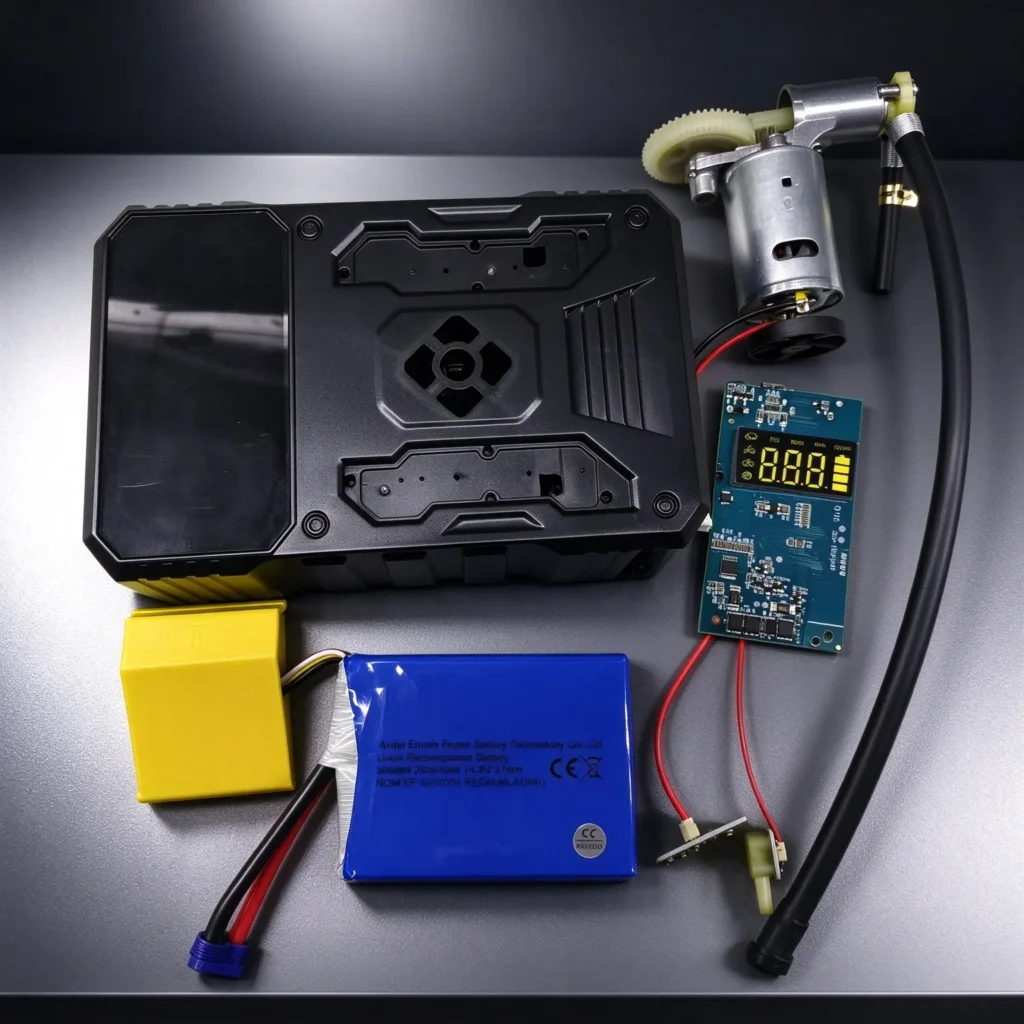
The core cost and safety risks of a jump starter are concentrated in the battery cells. Our incoming inspection is not “just pull a few cells and measure the voltage,” but rather screening out cells with excessive voltage differences, excessive internal resistance deviations, and poor batch consistency.
We perform two basic electrical performance tests on incoming battery cells: whether the voltage difference is too large (voltage difference standard: ); whether the internal resistance deviation is too large (resistance standard: ).
We retain the test data for each batch of battery cells. When a finished product later exhibits insufficient jump-start capability, we can trace back to which batch of cells and which indicator deviated. In terms of cell selection, we only use products from leading cell manufacturers in the industry. Before warehousing, they undergo multiple layers of inspection, and we refuse to use recycled cells.
II. In-Process Inspection: Control Consistency During Assembly
After the battery cells are sorted and matched, they enter the assembly stage. The inspection items we perform at this stage include: whether the housing appearance is free of defects, a preliminary judgment of whether the circuit board is normal (confirming whether the product can power on normally), and inspection of internal wiring layout and battery fixation (battery loosening after transport vibration is a common source of after-sales failures). We ensure that each product is intact and undamaged when assembly is completed.
III. Finished Product Inspection: Simulate Real Usage Scenarios
Finished product inspection is the part that buyers can most easily verify and should pay the most attention to. Every jump starter in our factory must pass the following types of tests before leaving the factory.
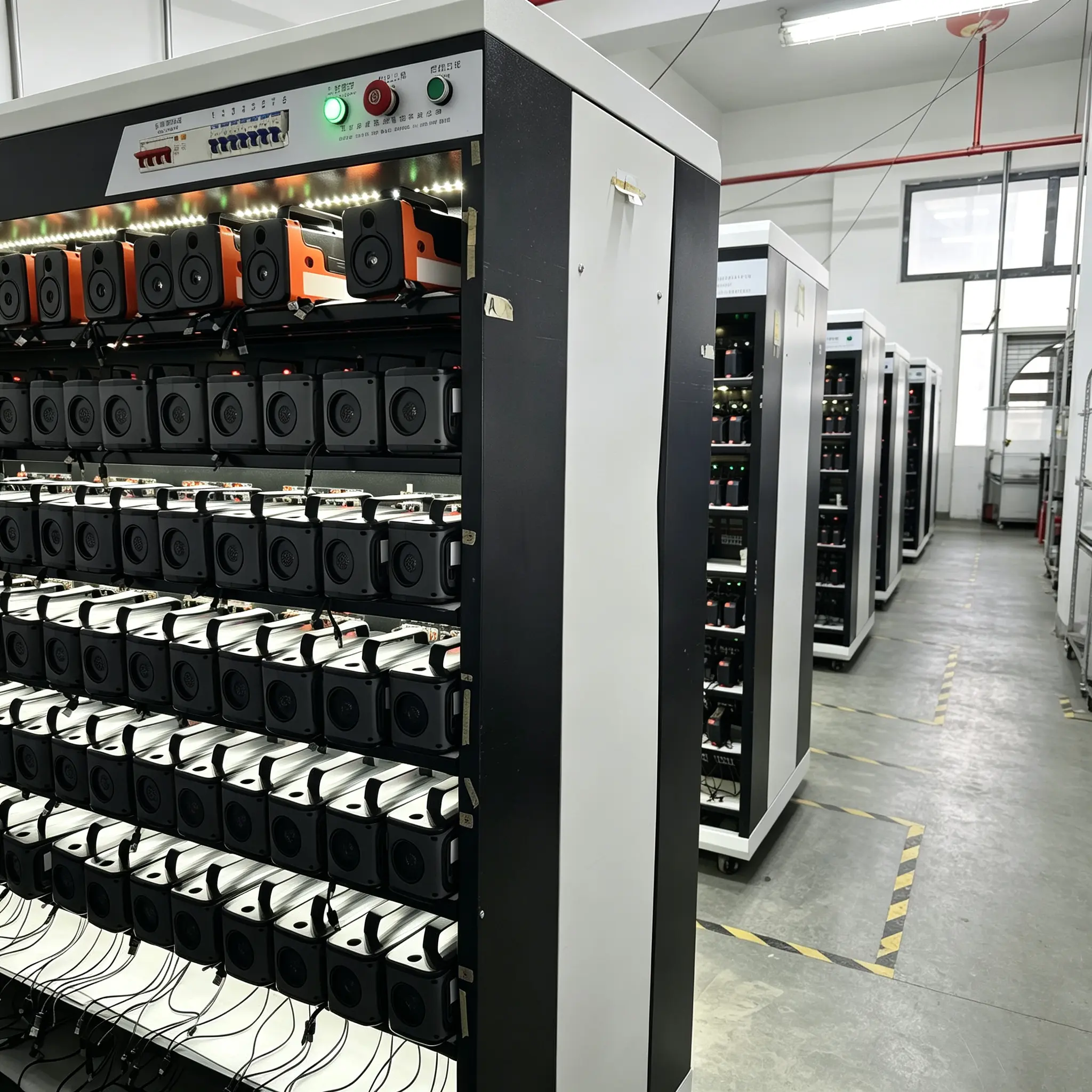
Aging: Ensure that every unit can charge/discharge normally, and preliminarily check whether the charge/discharge current and the charge/discharge time under rated power are normal.
QC inspection: Recheck whether each unit’s charge/discharge current and power meet standards, as well as the overload protection function.
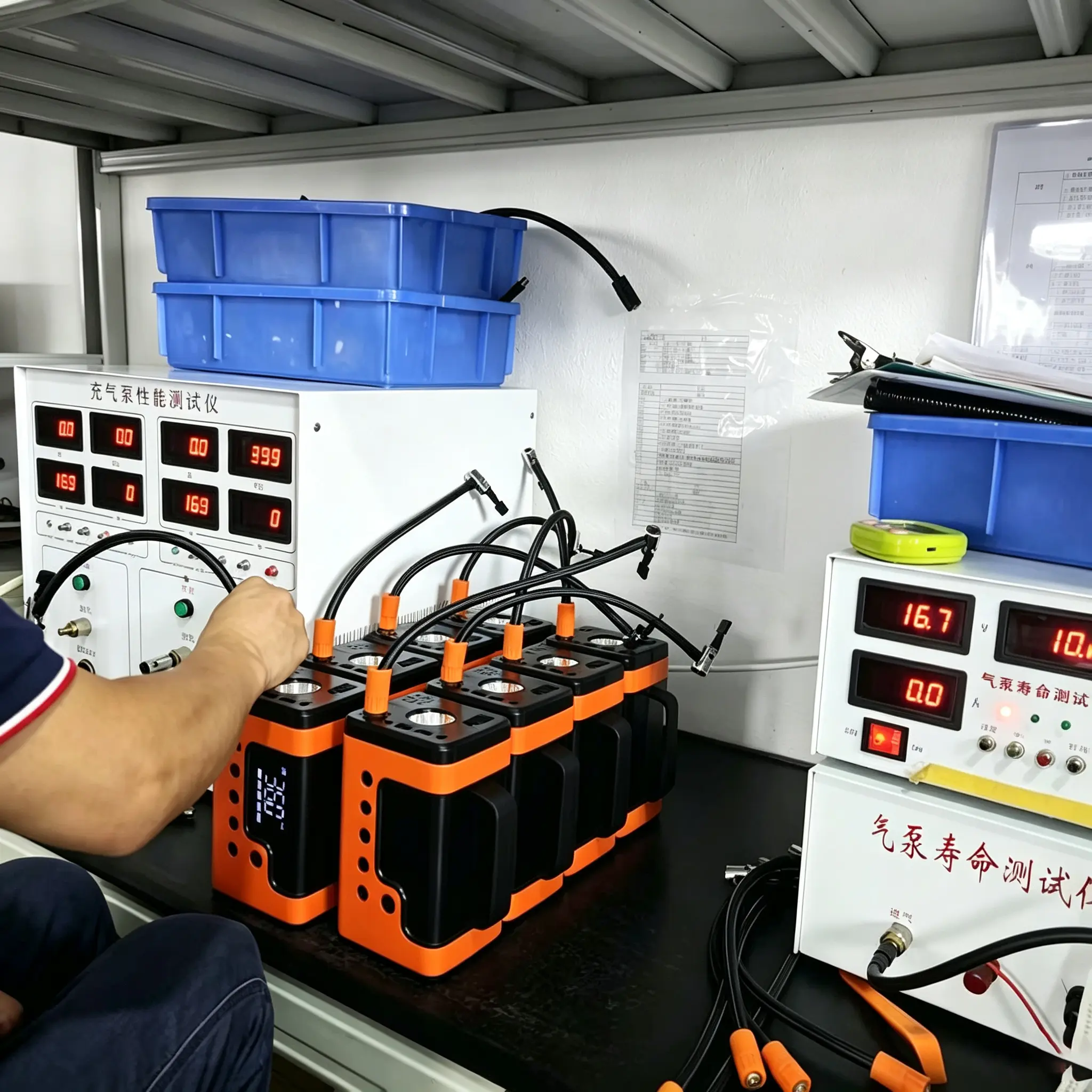
Inflation test: Ensure that every unit can inflate normally without air leakage and can automatically stop when reaching the set value.
Jump-start ignition test: Conduct sampling jump-start tests for each batch. On a simulation bench under standard load conditions, measure whether the starting current reaches the nominal value, and record the voltage drop amplitude at the instant of starting.
High/low temperature test: We also repeat this test under high and low temperature simulation environments—for example, verifying startup output after the cell temperature drops to near freezing/high temperature, to confirm the product’s actual usability in cold and hot regions.
Drop test: Perform multi-face drops of the packaging or bare unit from a certain height according to standards, and check for housing cracking, internal fixation loosening, and functional failure.
Vibration test: Simulate transport bumping conditions, retest electrical performance after the test, and confirm that internal connections have not deteriorated due to vibration.
Safety protection function verification: Cover scenarios such as short circuit and reverse connection. Taking reverse connection protection as an example, during the test, the clamps are deliberately connected in reverse to simulate a battery, and observe whether the product triggers an alarm and cuts off output, and whether it can automatically recover after the reverse connection is removed. For short circuit protection, the protection circuit is required to act within milliseconds under the condition of a direct short circuit at the output end, and not be damaged after the short circuit is removed.
IV. Final Verification Before Outbound: Documents and Physical Goods in Sync
After finished product testing passes, before outbound we have another step that buyers easily overlook but that actually has a significant impact: packaging and labeling verification.
The contents we check include: whether the model, capacity, appearance defects, and starting current parameters on the product label are consistent with the order; whether the language of warning statements meets the requirements of the target market; whether certification marks are correctly printed and the corresponding model is within the certification coverage; and whether the outer carton shipping marks, barcode readability, packing quantity, and carton specifications match.
That is the complete quality inspection process of our jump starter factory, from battery cell incoming to finished product outbound. For a good factory and good quality, look for Jintutor jump starter.
Jump Starter Factory Direct: Pick Your Favorite Style.PRODUCTS