We use cookies to ensure that we give you the best experience on our website.
Stay up to date on the latest factory news
5K subscribers
Factory updates, always on our radar. Production schedules at your fingertips. We don’t just pass the buck — we’re your “eyes on the ground.” Quality you can see, lead times you can trust. We look forward to connecting with you — your inquiry will never go unanswered.
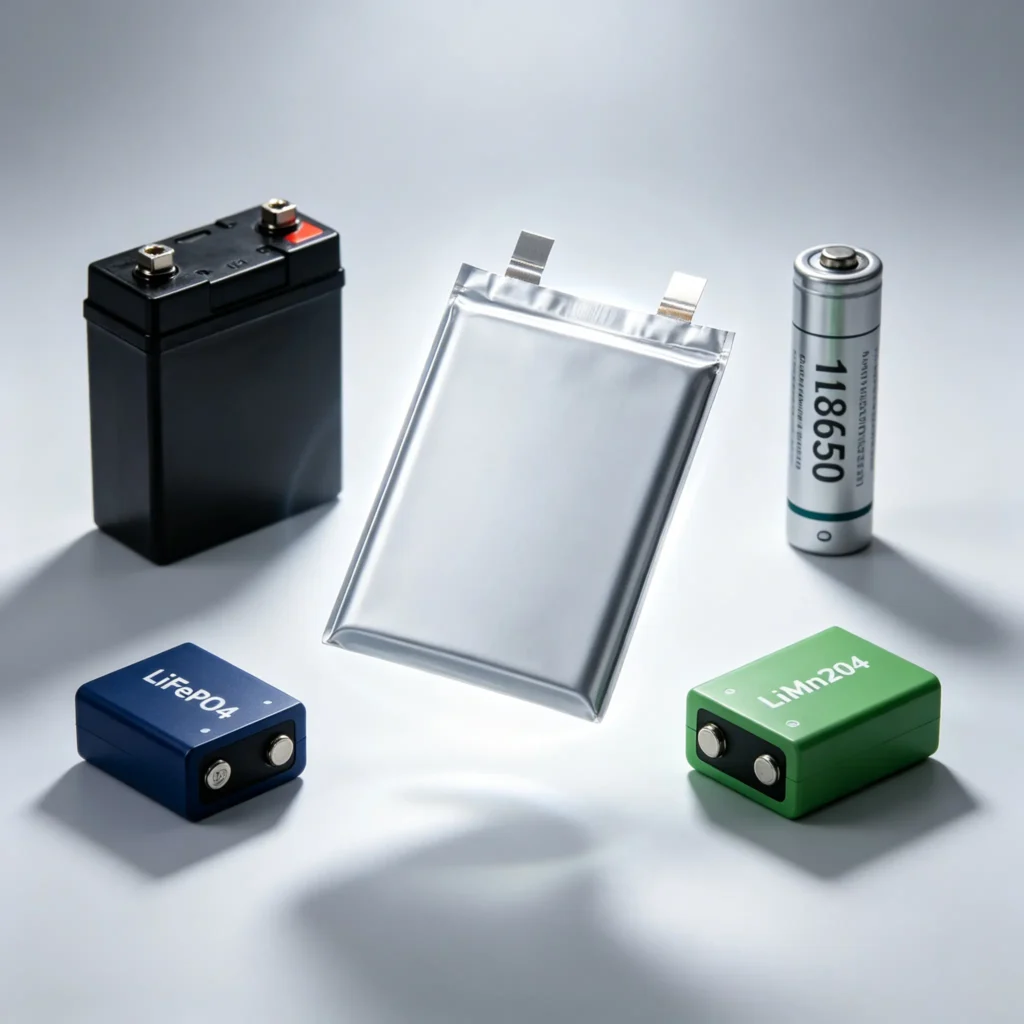
Almost all mainstream car jump starter manufacturers use lithium polymer (LiPo) batteries, while lead-acid, conventional liquid lithium-ion, and lithium iron phosphate (LiFePO4) alternatives are rarely used in portable starting devices. Owners often ask why LiPo dominates when several lithium chemistries are available. The answer lies in the extreme, short-duration, high-current duty of emergency engine cranking, which simultaneously demands high-rate discharge, safety, portability, temperature tolerance, and long standby storage. This article compares common battery types and explains why LiPo is the best all-around fit for car jump starters.
1. The core reasons why jump starter manufacturersrule out other battery types
A jump starter must deliver extreme instantaneous current within 1–3 seconds to crank and ignite the engine. Standard gasoline cars need 200–400 A of peak cranking current; large SUVs, pickups, and diesels exceed 500 A. The device then typically sits unused for months, so cells must have ultra-low self-discharge to stay ready. It must also work from subzero winter cold to extreme summer in-car heat, while remaining compact, safe, and durable. These five requirements—high-rate discharge, safety, portability, wide-temperature operation, and low self-discharge—eliminate most conventional battery technologies.
2. Why Other Batteries Are Unsuitable
Battery type
Key strengths
Critical weaknesses for jump starters
Lead-acid
Mature, low cost
3–5× the volume and weight; 10–20% monthly self-discharge; weak cold cranking; leakage risk
Conventional liquid Li-ion
Widely used in consumer devices
Rigid metal casing, poor vibration/impact tolerance; thermal runaway and leakage risk under high current; consumer cells typically only 1C–5C continuous
LiFePO4
Long cycle life, high-temperature stability, safe
Poor low-temperature capacity (below 50% at −20 °C); higher internal resistance and weaker instantaneous burst; rigid packaging limits compact design
Lithium manganese oxide (LMO)
Low cost, moderate discharge
Unstable high-temperature performance; rapid aging and rising internal resistance; largely phased out of this segment
Lead-acid is too bulky and self-discharges too fast for a maintenance-free standby tool. Conventional liquid Li-ion packs offer insufficient continuous discharge rates and poorer safety under vibration and current surges. LiFePO4 is excellent for EVs and stationary storage but struggles in cold-weather cranking and high-rate bursts. LMO is cheap but degrades quickly in hot in-car conditions. None meets all five requirements simultaneously.
3. Five Core Advantages of LiPo for Car Starting
LiPo cells use a gel polymer electrolyte and flexible aluminum-plastic packaging, avoiding free liquid electrolyte and rigid metal casings.
(1) Ultra-high discharge rate. Cells tuned for starting support 30C–50C discharge, delivering hundreds of amperes of peak current within 1–3 seconds for everything from compact cars to heavy diesels. Low internal resistance keeps voltage stable under load.
(2 )Superior safety. Gel polymer electrolyte and soft packaging greatly reduce leakage risk. Under extrusion, impact, overcharge, short circuit, or high current, LiPo cells typically show only minor bulging with a significantly lower fire/explosion risk; protection boards add overcharge, overdischarge, short-circuit, and over-temperature/current defense.
(3) High energy density and portability. For the same capacity and starting performance, LiPo is smaller and lighter than lead-acid or LiFePO4, enabling slim, easily stored jump starters.
(4) Ultra-low self-discharge. Monthly loss is only about 1%–3%, so a fully charged unit can sit for 3–6 months and still start a car—unlike lead-acid, which drains within one to two months.
(5) Wide temperature range. Stable operation from −20 °C to 60 °C outperforms LiFePO4 in cold discharge and LMO in hot aging, ensuring year-round reliability.
4. Conclusion
Lead-acid, liquid Li-ion, LiFePO4, and LMO each serve specific niches, but none simultaneously satisfies high-rate discharge, safety, low self-discharge, wide-temperature operation, and portability. As high-rate LiPo production costs have fallen, LiPo has become the optimal and mainstream cell choice for car jump starters, giving users long standby stability, reliable emergency starting, and durable safety.
Click to check out the battery booster you like.PRODUCTS